
Ayurvedic treatment for joint pain, muscle pain and arthritis for Joint pain, Muscle pain, Arthritis, Osteo Arthritis, Rheumatoid Arthritis, Cartilage regeneration, Gout, Frozen Shoulders, Tennis Elbow
Is body pain holding you back every day? Joint and muscle pain is one of the most common forms of suffering—and one of the most limiting. It can restrict movement, drain energy, and disrupt the joy of daily life. While physiotherapy or surgery can offer temporary relief, the pain often returns.
But lasting healing is possible when you address the root cause, not just the symptoms.
Common conditions treated: Joint pain, Muscle Pain, Arthritis, Osteo Arthritis, Rheumatoid Arthritis, Cartilage Regeneration, Gout, Frozen Shoulder, Tennis Elbow, Carpel Tunnel Syndrome
There are three main reasons why patients from 25+ countries swear by Marmmayogi. But before that we're sure you would like to know how Ayurveda can treat your joint/muscle pain and give you a higher 'quality of life'.
What is joint and muscle pain?
Joint and muscle pain is any discomfort in the joints or muscles. It can come on suddenly, build-up over time, and affect people of all ages.
Common causes include:
- Degenerative conditions – age-related wear and tear, osteoarthritis, and vitamin deficiencies Inflammation
- Injuries – fractures, sprains, dislocations, or soft tissue damage
Typical symptoms include:
- Pain or soreness
- Swelling
- Stiffness
- Reduced flexibility or mobility
- Discomfort that worsens with activity or persists at rest
How it feels:
Muscle pain: Often soreness, cramps, or spasms after overuse or exertion. It usually improves with rest.
Joint pain; Deeper and longer-lasting, felt as a constant ache or throbbing. Swelling and stiffness are common. Since it is deeper, it may continue even at rest and is more likely to worsen if left untreated.
Sometimes both occur together, making it harder to tell them apart. Some people feel pain that comes and goes, while others have constant discomfort.
What causes joint and muscle pain according to Ayurveda?
In Ayurveda, joint and muscle pain is often caused by an imbalance of the doshas (Vata, Pitta, Kapha) or a build-up of toxins (Ama).
Vata imbalance: Vata governs movement. When out of balance, it travels to the joints and weakens tissues, causing dryness, cracking or popping sounds, stiffness and pain.
Pitta imbalance: Pitta governs heat and metabolism. Although less involved, Pitta imbalance can cause hot, red, swollen, and inflamed joints that feel warm to the touch.
Kapha imbalance: Kapha provides stability and lubrication. When disturbed, it creates heaviness, stiffness, and cool swelling in the joints.
Poor digestion, unhealthy habits, stress, or lack of movement can worsen these imbalances and block nourishment to the joints.
How can Ayurveda treat joint pain, muscle pain and arthritis?
Unlike quick fixes that only mask pain, Ayurveda works on the root cause— balancing doshas, clearing toxins, and strengthening tissues—to give lasting relief and restore free movement.
Treatment is personalised and may include:
Panchakarma (Detoxification): Cleansing therapies like Virechana (purgation), Basti (enema), and Vamana (emesis) that reduce inflammation and toxins.
Herbal Remedies – Healing herbs such as Guggulu, Ashwagandha, Shallaki, Turmeric, and Nirgundi, prescribed in the right form (decoctions, tablets or powders) for your constitution.
External Therapies – Pain-relieving treatments like Abhyanga (oil massage), Pinda Sweda (herbal bolus), Janu Basti (oil pooling on joints), and Lepam (herbal paste) to reduce stiffness and swelling
Diet & Lifestyle Guidance – Simple but vital shifts like eating warm, nourishing foods, gentle movement, proper hydration, and stress management to keep doshas in balance.
Ongoing care
After discharge, it’s important to continue with internal medicines, follow a nourishing diet, maintain a balanced lifestyle, and regularly practice the recommended yoga asanas and pranayamas. These ongoing habits help sustain the benefits of the treatment and support long-term healing.
What is osteoarthritis?
Osteoarthritis is the most common form of arthritis. It happens when the protective cartilage that cushions your joints wears down over time, and the ligaments holding the joints together become weaker.
It usually affects the hands, knees, hips, and spine. If not managed, it may lead to deformity or even complete joint damage.
Common symptoms include:
- Pain during or after movement
- Reduced flexibility and mobility
- Swelling and inflammation
- Muscle weakness and stiffness
- Tenderness when you apply light pressure to or near joints
- Grating, cracking or popping sounds in the joints
- Bone spurs around the affected joint
What causes osteoarthritis according to Ayurveda?
In Ayurveda, osteoarthritis is linked to an imbalance of the Vata dosha, which governs movement and joint health. The condition is called Sandhigata Vata— literally, “Vata lodged in the joints.” Poor digestion and metabolism can also lead to toxin (ama) buildup, triggering inflammation and speeding up joint degeneration.
How can Ayurveda treat osteoarthritis?
Ayurveda focuses on calming Vata, easing inflammation, clearing toxins and slowing down joint degeneration. Treatment is most effective when started in the early stages, before degeneration becomes severe. If joint alignment is disturbed, Marma treatment can gently help restore it to its proper position.
Step 1: Reduce inflammation
We begin by applying warm medicinal heat packs and prescribing internal anti-inflammatory medicines. This helps reduce swelling and allows toxins to be reabsorbed and eliminated naturally through sweat, urine, and stools.
Step 2: Release muscle tightness and circulation
Through hot oil massages and simple yoga, we soften tight muscles and improve blood circulation.
Step 3: Eliminate accumulated toxins
We administer enemas and controlled sweating and purgation to help release accumulated toxins. Pranayama is also an effective tool.
Step 4: Strengthen muscles, ligaments and nerve joints
We use therapeutic massage and internal medication to rebuild strength in the muscles, ligaments and nerve joints. Marma Therapy plays a key role in treating pain and releasing blocked energy.
Ongoing care
After discharge, it’s important to continue with internal medicines, follow a nourishing diet, maintain a balanced lifestyle, and regularly practice the recommended yoga asanas. These ongoing habits help sustain the benefits of the treatment and support long-term spine-health.
What is rheumatoid arthritis?
Rheumatoid Arthritis (RA) is a chronic, autoimmune disease where your own immune system attacks the tissue lining the joints. It usually shows up on both sides of the body and mainly affects the fingers, hands, wrists, knees, ankles, feet and toes.
Common symptoms include:
- Morning stiffness lasting 30 minutes or more (sometimes for hours in severe cases)
- Pain, swelling, redness and warmth
- Fatigue
- Low flexibility or range of motion
- Rheumatoid nodules (firm lumps under the skin, often near the elbows, hands or pressure points).
- Occasionally, mild fever or loss of appetite due to inflammation
Many people notice that stiffness is worse on waking and improves with movement. If left untreated, ongoing inflammation can cause calcium deposits and joint deformity. The inflammation can also spread to other organs such as the heart, lungs and eyes.
It is aggravated through lifestyle, injury, posture, stress and poor metabolism.
What causes rheumatoid arthritis according to Ayurveda?
In Ayurveda, rheumatoid arthritis is understood as “Aamavata”. The word comes from “Ama” (toxins formed due to poor digestion) and “Vata” (the dosha governing movement).
- When Ama accumulates in the body, it settles in the joints.
- The disturbed Vata dosha carries these toxins into the tissues, causing pain, stiffness, and restricted movement.
- If Pitta is also aggravated, it creates inflammation, improper metabolism, heat, and swelling.
Over time, this combination of Ama and Vata blocks nourishment, dries out tissues, and leads to further damage such as calcium deposits, impaired circulation, joint deformity and blocked energy channels.
How can Ayurveda treat rheumatoid arthritis?
Treatment is focused on removing toxins to reduce inflammation. Since RA is closely linked to metabolism and immunity, Ayurveda also works to revive digestive fire (Agni) and strengthen the body’s natural defenses.
Step 1: Reduce inflammation
We begin by applying warm medicinal heat packs and prescribing internal anti-inflammatory medicines. This helps reduce swelling and allows toxins to be reabsorbed and eliminated naturally through sweat, urine, and stools.
Step 2: Release muscle tightness and improve circulation
Through hot oil massages and simple yoga, we soften tight muscles and improve blood circulation.
Step 3: Eliminate accumulated toxins
We administer enemas, controlled sweating and purgation to help release accumulated toxins. Pranayama is also an effective tool.
Step 4: Strengthen muscles, ligaments and nerve joints
We use therapeutic massage and internal medication to rebuild strength in the muscles, ligaments and nerve joints. Marma Therapy is also highly effective in treating pain and releasing blocked energy.
Ongoing care
After discharge, it’s important to continue with internal medicines, follow a nourishing diet, maintain a balanced lifestyle, and regularly practice the recommended yoga asanas. These ongoing habits help sustain the benefits of the treatment and rekindle the ‘metabolic fire’.
What is gout?
Gout is a type of inflammatory arthritis caused by a buildup of uric acid in the body. When uric acid levels are high, sharp crystals form in your joints, leading to sudden pain and swelling. It usually starts in the big toe, but it can also spread to the ankles, knees, feet, hands, wrists and elbows if left unmanaged.
A gout attack can come on without warning (often at night) and may last for days or even weeks. Then it may disappear for some time before the next flare.
Symptoms during a gout attack include:
- Intense pain
- Stiffness and swelling
- Discolouration or redness
- Tenderness (even the touch of a bedsheet can hurt)
- Warmth, or feeling like the joint is ‘on fire’
You’re more likely to develop gout if you eat a lot of purine-rich foods (alcohol, sugary drinks and foods, red meats and shellfish), are overweight, have a family history of gout, live with conditions like diabetes, high blood pressure, kidney or heart disease, or have an imbalance in gut health.
Gout can be extremely painful, but with the right care, diet and lifestyle changes, it’s very well managed, and you can live pain-free.
What causes gout according to Ayurveda?
In Ayurveda, gout is known as “Vatarakta”. The name itself explains the condition —when the Vata dosha (which governs movement) is disturbed and combines with Rakta dhatu (the blood tissue), it leads to pain, stiffness, swelling, and inflammation in the joints.
The root cause is the build-up of toxins (Ama) from poor digestion and metabolism. When these toxins accumulate, they disturb the balance of the Vata and Pitta doshas:
- Vata imbalance creates joint pain, stiffness, and restricted movement.
- Pitta imbalance adds inflammation, heat, and a burning sensation in the joints.
Over time, this cycle of toxins and dosha imbalance leads to the painful flare-ups.
How can Ayurveda treat gout?
Treatment is focused on helping the body eliminate uric acid, reduce inflammation, and balancing the Vata and Pitta doshas.
Step 1: Reduce inflammation
We begin by applying warm medicinal heat packs and prescribing internal anti-inflammatory medicines. This helps reduce swelling and allows toxins to be reabsorbed and eliminated naturally through sweat, urine, and stools.
Step 2: Release muscle tightness and improve circulation
Through hot oil massages and simple yoga, we soften tight muscles and improve blood circulation.
Step 3: Eliminate accumulated toxins
We administer enemas, controlled sweating and purgation to help release accumulated toxins. Pranayama is also an effective tool.
Step 4: Strengthen muscles, ligaments and nerve joints
We use therapeutic massage and internal medication to rebuild strength in the muscles, ligaments and nerve joints. Marma Therapy is also highly effective in treating pain and releasing blocked energy.
Ongoing care
After discharge, it’s important to continue with internal medicines, follow a nourishing diet, maintain a balanced lifestyle, and regularly practice the recommended yoga asanas. These ongoing habits help sustain the benefits of the treatment and rekindle the ‘metabolic fire’.
What is frozen shoulder?
Frozen shoulder is a condition where the shoulder joint becomes painful, stiff, and gradually loses its range of motion. Over time, the joint can feel almost “stuck,” making everyday movements difficult.
It usually develops in three stages:
- Freezing stage – Pain increases, and shoulder movement becomes restricted.
- Frozen stage – Pain may reduce, but stiffness persists, limiting daily activities.
- Thawing stage (recovery) – Movement slowly begins to return, and flexibility improves.
The pain can also spread to the upper back, neck, and surrounding muscles.
What causes frozen shoulder according to Ayurveda?
In Ayurveda, frozen shoulder is mainly caused by an imbalance of Vata dosha, which leads to pain and restricted movement. The stiffness comes from Kapha dosha, which increases heaviness and blocks mobility.
There are two types described:
Dry inflammation – Primarily Vata-related, with pain that moves around.
Moist inflammation – Caused by Kapha or Ama (toxins) blocking Vata, leading to localised pain and stiffness.
How can Ayurveda treat frozen shoulder?
Treatment focuses on loosening the joints, pacifying Vata and Kapha imbalances, and unblocking energy channels to relieve stiffness and pain.
At Marmma Yogi, Marma Therapy is highly effective in treating frozen shoulder. By stimulating specific energy points, it helps restore movement, improve circulation, reduce stiffness, and release toxins—supporting a gradual but lasting recovery.
Step 1: Reduce inflammation
We begin by applying warm medicinal heat packs and prescribing internal anti-inflammatory medicines. This helps reduce swelling and allows toxins to be reabsorbed and eliminated naturally through sweat, urine, and stools.
Step 2: Release muscle tightness and improve circulation
Through hot oil massages and simple yoga, we soften tight muscles and improve blood circulation.
Step 3: Eliminate accumulated toxins
We administer enemas, controlled sweating and purgation to help release accumulated toxins. Pranayama is also an effective tool.
Step 4: Strengthen muscles, ligaments and nerve joints
We use therapeutic massage and internal medication to rebuild strength in the muscles, ligaments and nerve joints. Marma Therapy plays a key role in treating pain and releasing blocked energy.
Ongoing care
After discharge, it’s important to continue with internal medicines, follow a nourishing diet, maintain a balanced lifestyle, and regularly practice the recommended yoga asanas. These ongoing habits help sustain the benefits of the treatment and rekindle the ‘metabolic fire’.
Now the 3 reasons why patients from 25+ countries trust us.
Reason one: Marma Ayurveda
Like most Ayurveda hospitals we also do the the oil baths, massages and heat packs. What differentiates us is that, we also add-on a specialized branch of Kerala Ayurveda called Marma Ayurveda.
What is Marma Ayurveda? It is common knowledge that healing is much faster when the mind energy supports the treatment on the physical body. The mind-body is connected by energy channels which get blocked or weakened due to the disease. By cleaning and strengthening these channels through Marma Ayurveda, the mind energy flows freely towards the diseased parts. At Marmmayogi, Marma Ayurveda is done along with the Ayurveda treatments, making the massages and therapies far more effective. With Marma Yoga and Marma Meditation, the additional focus on mind-body channels is complete. All this makes the healing process faster. (KNOW MORE ABOUT MARMA AYURVEDA)
Reason two: Personalised attention and treatment
While the common Ayurveda treatments (massages and oil baths) are done by trained therapists, Marma therapy needs years of practice. The chief physician Dr. Manoj, who comes with a family tradition of 250 years, has been personally trained by his grandfather. Dr. Manoj has to do it personally on each patient. Since there is a limit to the number of patients Dr. Manoj can personally attend, we are a small hospital with limited number of rooms. With the doctor and his family staying on the premises, our patients are also pleasantly surprised with the family atmosphere and personalized attention.
Marma Therapy
Marma Therapy by the Doctor
While Traditional Kerala Ayurveda Therapy is done by Therapists, the Marma Therapy is done by Dr Manoj specific to the health issue.
Reason three: Special proprietary medicines
With a family tradition of 250 years, many highly effective medicines have been handed down over generations. These medicines are not available outside. Fresh herbs collected from the herbal garden are used very frequently in the treatments. All this makes the process far more effective.
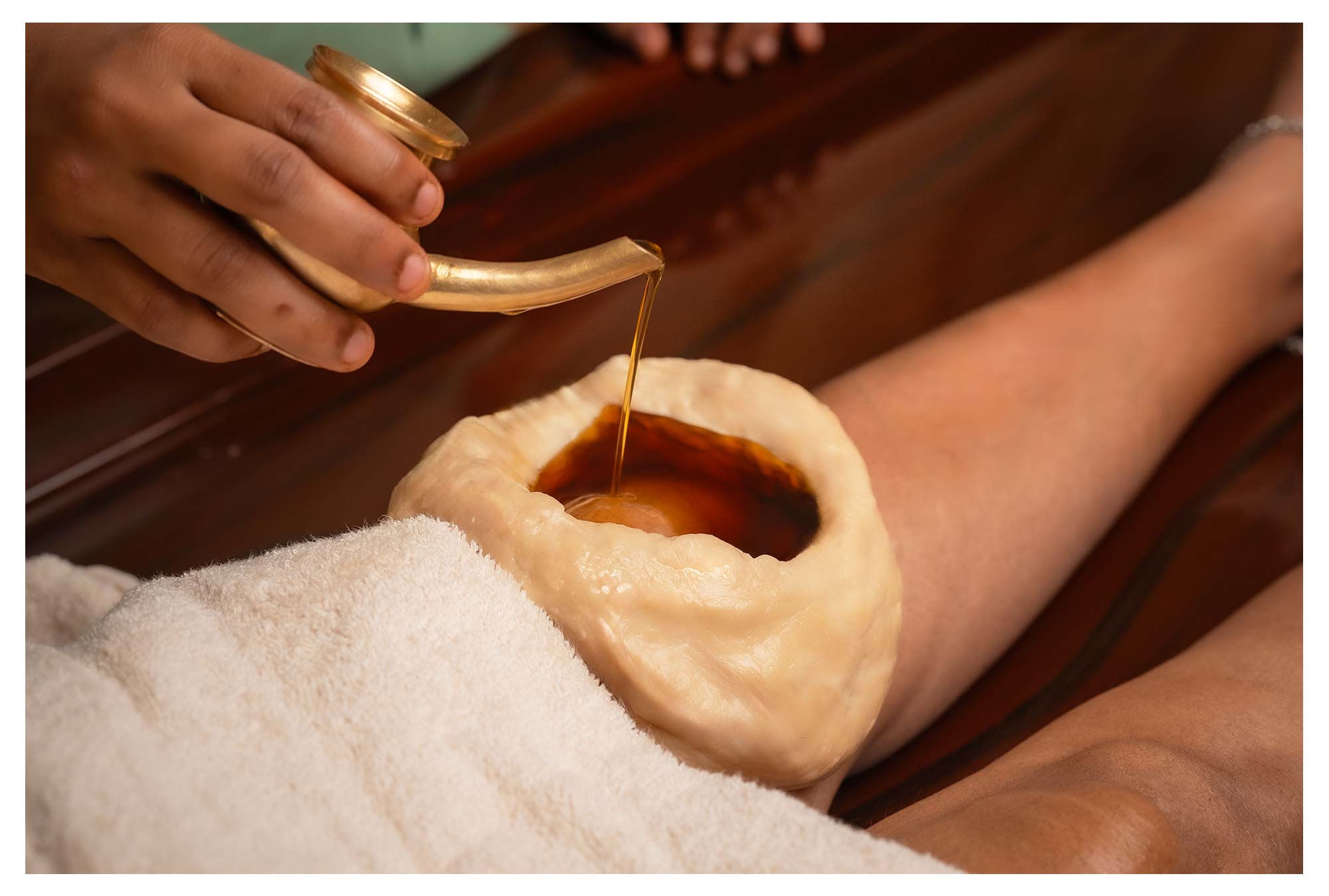
Discover Effective Muscle Pain Treatment through Ayurveda Today
Do you become weary of living with chronic muscular pain? Marmmayogi knows how crippling muscular and joint pain can be. Our tailored Ayurvedic therapies aim to heal the underlying reasons for your suffering rather than just cover the symptoms.
Our holistic approach guarantees that your treatment is tailored and successful by combining conventional Ayurvedic procedures with the creative muscle pain treatment ayurveda. Led by Dr Manoj, our knowledgeable staff offers thorough treatment customised to your particular requirements, from osteoarthritis to frozen shoulder.
Imagine getting back your quality of life! Our step-by-step therapy phases concentrate on lowering inflammation, improving circulation, and detoxifying your body. Our treatments consist of natural medications that work synergistically to cure your body from the inside, yoga asanas, and therapeutic massages.
Don’t allow muscular discomfort to run your life any longer. Schedule a consultation with our knowledgeable staff to start your path towards relief. In our calm surroundings, where healing is a family legacy, experience the warmth of tailored care.

The first step in the process is to talk to our doctor
The first step in the process is to talk to our doctor
Google Map Reviews more

Testimonials more


Book a Video Consultation with the Chief Physician
Our Marma Ayurveda expert Dr Manoj Chandrasekharan shall hold a video consultation with you where most treatments, lifestyle changes and medicines can be prescribed.
Direct treatment is only at Marmmayogi Ayurveda Hospital in Thodupuzha, Idukki, Kerala
* We don’t share your personal info with anyone.